

For years, farming has largely depended on the natural rainy season. Farmers plant when the rains begin, grow their crops, and harvest when the season ends. While this approach can work, unpredictable rainfall, prolonged dry seasons and changing weather patterns are making traditional seasonal farming increasingly challenging.
Seasonless farming offers a different approach. Instead of limiting crop production to the rainy season, farmers use reliable water sources and irrigation systems to grow crops throughout the year.
With the right irrigation system, farmers can control when and how much water their crops receive, allowing production to continue even when rainfall is insufficient.
For farmers in Uganda and across Africa, seasonless farming can create opportunities to increase productivity, improve income, supply markets more consistently and make better use of available farmland.
Seasonless farming is the practice of producing crops throughout the year rather than relying entirely on natural rainfall or a single growing season.
It does not mean ignoring the seasons. Instead, it means using technologies such as irrigation, water storage, solar-powered water pumping and efficient water application systems to reduce dependence on rainfall.
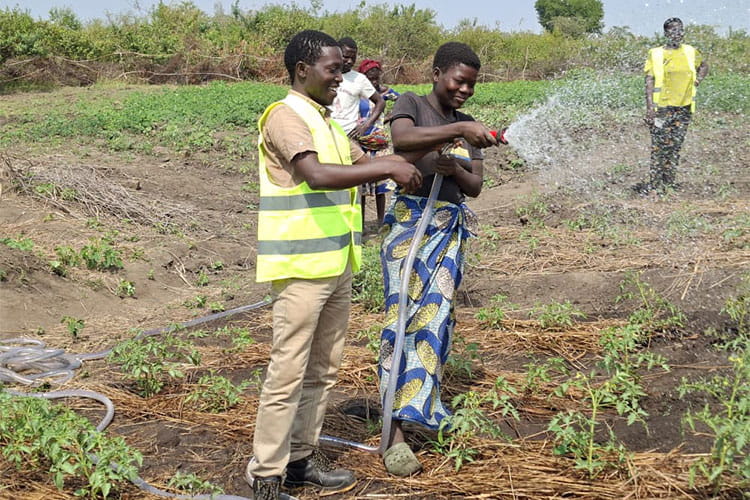
For example, a farmer can grow vegetables during the rainy season and continue production during the dry season by supplying crops with water through drip irrigation or sprinkler systems.
This makes farming more predictable and gives farmers greater control over their production cycles.
One of the biggest advantages of seasonless farming is the ability to produce crops beyond the traditional rainy season.
Without irrigation, farmers may have to wait several months for the next reliable rainfall before planting again. With irrigation, water can be supplied when crops need it.
This allows farmers to plan multiple production cycles instead of depending on one or two seasons each year.
Year-round farming can therefore increase the productive use of farmland and agricultural resources.
Rainfall is difficult to control. It can arrive late, stop earlier than expected or become irregular.
Irrigation gives farmers an alternative source of water for crop production.
By combining irrigation with good agronomic practices, farmers can reduce the risks associated with unreliable rainfall and maintain production during periods of limited precipitation.
When crops receive adequate water at the right time, they have better conditions for growth.
Irrigation can help farmers maintain consistent moisture levels in the root zone, particularly during dry periods.
This can support higher and more reliable yields when irrigation is properly designed and managed alongside appropriate soils, seeds, nutrients and pest management.
Seasonless farming can allow farmers to target crops when market conditions are favourable.
Vegetables, fruits, herbs and other high-value crops can have strong market demand, but production needs to be carefully timed.
With irrigation, farmers have greater flexibility to schedule production instead of being restricted to rainfall patterns.
This can create opportunities to supply markets when competition from rain-fed production is lower.
More production cycles can create more opportunities to generate income.
For instance, instead of harvesting once a year, a farmer may be able to produce several crop cycles depending on the crop, irrigation system, soil, market demand and farm management practices.
However, successful seasonless farming is not simply about growing more crops. Farmers should first identify reliable markets, calculate production costs and select crops with suitable demand.
Good production planning combined with irrigation can help turn farming into a more consistent business.
Year-round crop production can contribute to a more consistent supply of food.
When farmers are able to continue producing during dry periods, the availability of fresh produce does not have to depend entirely on rainfall.
At household level, this can improve access to food. At commercial level, consistent production can help supply local markets, institutions, processors and other buyers.
Land is one of the most important resources in agriculture.
If farmland is only productive during the rainy season, a significant portion of the year may remain underutilised.
Seasonless farming can help farmers make better use of their land by enabling production during periods when rain-fed agriculture would otherwise be difficult.
This is particularly valuable for farmers operating on relatively small pieces of land who want to increase production without necessarily acquiring additional farmland.
Irrigation gives farmers more control over the timing of planting.
Instead of simply asking, “When will the rains come?”, farmers can consider questions such as:
This shifts farming from a largely rainfall-dependent activity toward a more planned and market-oriented agricultural business.
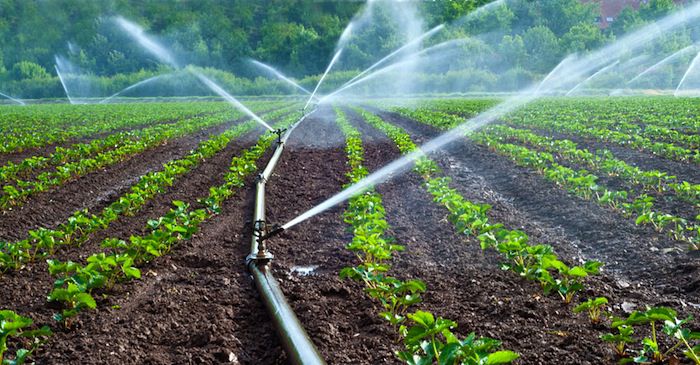
Modern irrigation systems can deliver water directly to where crops need it.
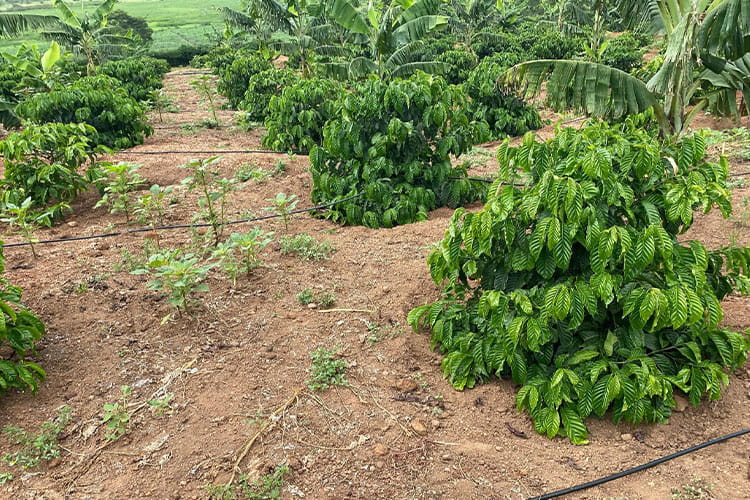
For example, drip irrigation applies water close to the plant root zone, while sprinkler systems distribute water across the crop area.
When properly designed, operated and maintained, these systems can improve water-use efficiency compared with uncontrolled watering methods.
Farmers can also combine irrigation with water storage, soil moisture management and scheduling to make better use of available water.
Weather variability is one of the major challenges facing farmers.
Periods of drought, delayed rainfall and irregular precipitation can affect planting schedules and crop performance.
Seasonless farming does not eliminate weather-related risks, but irrigation provides farmers with an additional tool for managing water availability.
Combined with practices such as soil conservation, crop diversification, water harvesting and good agronomic management, irrigation can strengthen the resilience of farming enterprises.
Irrigation is at the heart of successful seasonless farming because crops need a reliable source of water when rainfall is inadequate.
The right irrigation solution depends on several factors, including:
Common irrigation options include drip irrigation, sprinkler irrigation, rain guns, centre pivots and other customised irrigation systems.
For farms located away from reliable grid electricity, solar-powered irrigation can also provide a practical way to pump water for agricultural production.
Solar irrigation systems use solar energy to power water pumps, reducing dependence on grid electricity or fuel-powered pumping.
During sunny periods, solar panels generate electricity that powers the pumping system, allowing water to be moved from an appropriate source to storage tanks or directly to an irrigation system.
For farmers, the combination of solar pumping and efficient irrigation can provide a reliable approach to year-round crop production, particularly in areas with good solar resources.
The system should, however, be properly sized based on the water source, pumping requirements, irrigation demand and farm characteristics.
Transitioning from rain-fed farming to year-round production does not necessarily mean installing the most expensive irrigation system available.
Farmers can start by assessing their farm and production goals.
Determine whether the farm has access to a suitable source such as a borehole, well, river, reservoir, dam or harvested rainwater.
The water source should be assessed for quantity, quality and reliability.
Different crops require different amounts of water.
Understanding crop water requirements helps determine the appropriate irrigation system, pump capacity and water storage requirements.
The farm should be assessed for size, soil type, slope, crop layout and existing infrastructure.
This information helps determine the most appropriate irrigation method.
A farmer may choose drip irrigation, sprinkler irrigation or another irrigation technology depending on the crop and farm conditions.
There is no single irrigation system that is suitable for every farm.
Water pumping requires energy. Farmers can consider grid electricity, solar energy or other suitable pumping options based on availability and operating costs.
Before increasing production, farmers should identify potential buyers and understand market demand.
Producing more without a market can increase costs rather than profits.
Regular maintenance is essential for reliable irrigation.
Filters, pipes, pumps, emitters, sprinklers and other components should be inspected regularly to identify leaks, blockages and other problems before they affect production.
For many commercial and smallholder farmers, seasonless farming can offer significant opportunities. However, irrigation should be viewed as a farm investment rather than simply an expense.
The potential return depends on factors such as crop selection, market prices, water availability, farm size, irrigation costs, labour, input costs and production efficiency.
A proper assessment can help farmers determine whether an irrigation investment is financially viable before installation.
At Sprinktech, we help farmers and agricultural businesses develop water, irrigation and energy solutions designed around their production needs.
Our solutions include irrigation systems, water pumps, solar-powered water pumping, boreholes and other agricultural water solutions.
Whether you are planning to expand an existing farm or move from rain-fed agriculture toward year-round production, the right irrigation system can help you take greater control of your farm’s water supply.
Don’t let the end of the rainy season mean the end of your farming season.
Contact Sprinktech on +256 709 826632 to discuss an irrigation solution for your farm.



WhatsApp us