

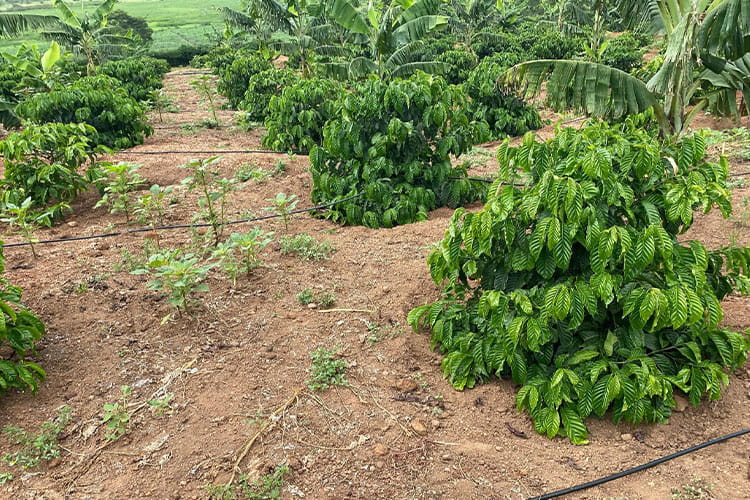
Coffee farming in Uganda is increasingly facing one major challenge: unreliable rainfall. Dry spells can put coffee plants under water stress, affecting flowering, fruit development and ultimately farm productivity. The good news is that farmers can reduce their dependence on rainfall through properly designed irrigation systems.
But with different irrigation technologies available, what is the best irrigation system for coffee farming in Uganda?
The best system depends on your farm size, water source, terrain, soil type, energy availability and budget. However, drip irrigation, sprinkler irrigation and solar-powered irrigation systems are among the most practical solutions for coffee farmers.
In this guide, we explore the best irrigation systems for coffee farming in Uganda and how farmers can choose the right solution for their farms.
Uganda has favourable conditions for coffee production, but rainfall is not always predictable. Extended dry periods can cause water stress, especially when coffee plants need adequate moisture for important stages of growth.
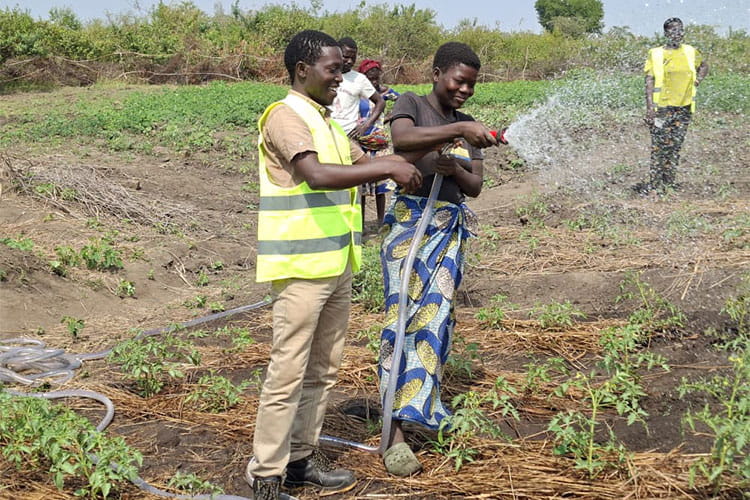
Irrigation provides farmers with greater control over water availability. Instead of depending entirely on rainfall, farmers can supplement natural rainfall with water from suitable sources such as boreholes, reservoirs, ponds, rivers and other reliable sources.
With a well-designed irrigation system, farmers can:
For coffee farmers, irrigation is not simply about adding more water—it is about delivering the right amount of water, at the right time and in the right place.
There is no single irrigation system that is best for every coffee farm. The right solution should be designed around the farm’s specific conditions.
Here are three irrigation options worth considering.
Drip irrigation is one of the most efficient irrigation methods for coffee farming.
It delivers water slowly through emitters positioned along irrigation lines, allowing water to reach the soil around the coffee plant’s root zone.
This makes drip irrigation particularly useful for farmers who want to maximise water-use efficiency.
However, drip irrigation requires proper filtration, pressure management and regular maintenance to prevent clogging and ensure uniform water distribution.
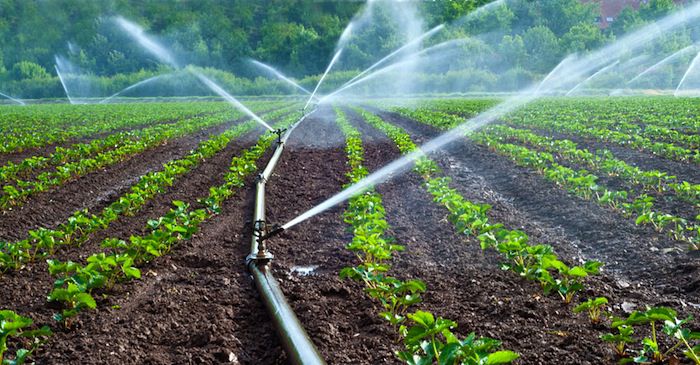
Sprinkler irrigation applies water across the farm through pressurised sprinklers.
It can be suitable for coffee farms where wider-area coverage is required and where the farm’s terrain, water availability and layout support sprinkler operation.
However, sprinkler systems generally require adequate pumping pressure, and water distribution can be affected by factors such as wind. Proper system sizing and design are therefore essential.
For many coffee farmers in Uganda, access to affordable and reliable energy is another challenge.
This is where solar-powered irrigation systems can make a difference.
A solar irrigation system uses solar panels to generate electricity that powers a water pump. The pump moves water from the source to the irrigation system or a storage tank.
A typical setup can include:
Solar panels → Solar pump → Water source → Storage tank → Irrigation system → Coffee plants
Solar-powered irrigation can be particularly valuable for farms located away from reliable grid electricity.
For many coffee farms, the most effective approach may be to combine technologies rather than choose only one.
A solar-powered water pump can provide the energy for pumping, while drip irrigation distributes the water efficiently around the coffee plants.
This combination can provide farmers with a practical water-management solution that addresses both the energy and irrigation challenges of coffee production.
The system can be designed to pump water into a storage tank during periods of sunlight and distribute it through irrigation lines according to the farm’s water requirements.
This approach can be especially useful for coffee farmers looking to reduce dependence on rainfall while managing their water resources more efficiently.
Before installing an irrigation system, farmers should consider several important factors.
The first step is determining where your irrigation water will come from.
Possible sources may include:
The water source should be assessed for reliability, quality and available volume.
A small coffee farm will have different irrigation requirements from a large commercial estate.
Farm size affects:
Uganda’s coffee farms can be located in flat, gently sloping or hilly areas.
Terrain affects water pressure and distribution. A professional irrigation design should therefore account for changes in elevation to ensure that plants receive water as uniformly as possible.
Different soils hold and transmit water differently.
Sandy soils may require more frequent applications, while heavier soils may retain water for longer. Understanding your soil helps determine an appropriate irrigation schedule.
If grid electricity is unreliable or unavailable, solar-powered pumping can provide an alternative.
Farmers should consider the required pumping head, water volume, daily water requirement and available solar energy when sizing a solar pumping system.
A good irrigation system should be easy to operate and maintain.
Farmers should plan for regular inspection of:
Regular maintenance helps keep the system performing efficiently.
There is no single water requirement for every coffee farm.
Water demand depends on factors such as coffee variety, plant age, weather conditions, soil type, farm location, plant spacing and the availability of rainfall.
This is why irrigation systems should be designed based on an assessment of the farm rather than simply choosing a pump or irrigation kit based on acreage alone.
A professional irrigation assessment can help determine:
Water source → Water requirement → Pumping requirements → Storage → Distribution → Irrigation schedule
This ensures that the system is properly matched to the farm.
Installing irrigation without proper planning can result in wasted water and unnecessary costs.
Avoid these common mistakes:
A pump should be selected based on factors such as water source, required flow rate and total pumping head—not simply on horsepower.
Incorrect pipe sizing, pressure and irrigation layout can lead to uneven water distribution.
Poor water quality can clog drip emitters and affect system performance.
Farmers should consider the long-term costs of energy, maintenance, spare parts and system operation.
Even a high-quality irrigation system requires regular inspection and maintenance to continue performing effectively.
Irrigation gives farmers greater control over one of the most important factors in crop production: water.
Instead of waiting and hoping for sufficient rainfall, farmers can plan their water use around the needs of their coffee plants.
For Uganda’s coffee farmers, this can be an important step towards building more resilient farms and improving water management.
Smart irrigation does not mean using more water. It means using water more effectively.
At Sprinktech, we provide water, irrigation and energy solutions designed around the specific needs of farmers.
Our solutions include:
Our team can help you assess your farm, understand your water requirements and identify an irrigation solution suited to your farming conditions.
Whether you are managing a smallholder coffee farm or a larger commercial plantation, the right irrigation system can help you farm with greater confidence beyond the rainy season.
Don’t let prolonged dry spells put your coffee production at risk.
Talk to Sprinktech today for professional irrigation advice and find the right water and irrigation solution for your coffee farm.
Sprinktech– Reliable Water & Irrigation Solutions for Better Farming.
Drip irrigation is often a strong choice where efficient water application is the priority. However, the best system depends on the farm’s water source, size, terrain, soil and budget. Solar pumping can also be combined with drip or sprinkler irrigation.
Yes. Solar-powered water pumps can be used to move water from suitable sources to storage tanks or irrigation systems, particularly where grid electricity is unavailable or unreliable.
Yes. Drip irrigation can deliver controlled amounts of water close to coffee plants’ root zones and can be an efficient option when properly designed, installed and maintained.
Pump selection should be based on factors including the water source, required water volume, total pumping head, irrigation method and daily irrigation requirements. A professional assessment is recommended before selecting the pump.
Yes. Sprinktech provides irrigation and water-pumping solutions and can help farmers assess their water needs and develop an appropriate irrigation solution.



WhatsApp us