Introduction
For farmers, irrigation is no longer simply an option—it is an important investment in reliable agricultural production. With changing rainfall patterns and prolonged dry seasons, having a dependable farm irrigation system can help protect crops and improve productivity.
An affordable irrigation system starts with understanding your farm’s water requirements, crop type, soil, farm size and available water source. Proper planning ensures that you invest in equipment that meets your needs without unnecessary costs.
1. Assess Your Farm’s Water Requirements
Before installing an irrigation system, determine how much water your crops require. Consider:
- Farm size
- Type of crop
- Soil type
- Crop spacing
- Water source
- Distance between the water source and farm
- Difference in elevation
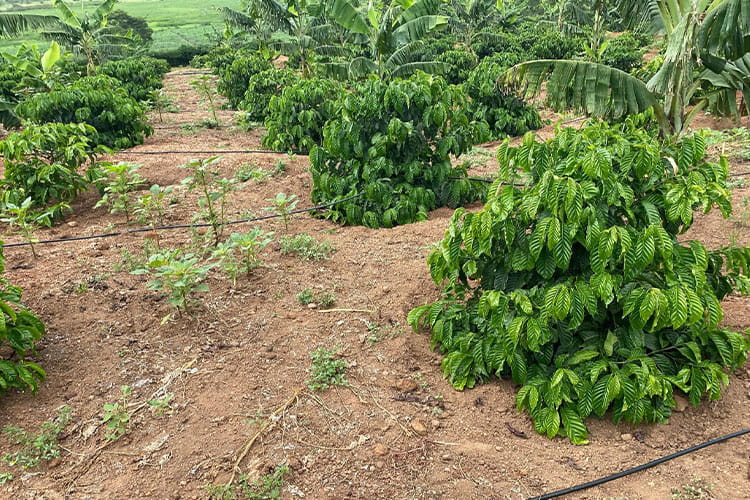
For example, a coffee irrigation system may require a different design from a vegetable farm irrigation system.
2. Identify a Reliable Water Source
Your irrigation system needs a dependable water source. Depending on your location, this could include a borehole, well, river, lake, dam, rainwater harvesting system or storage tank.
The water source should be assessed for both availability and suitability before selecting a pump and irrigation equipment.
3. Choose the Right Irrigation Method
Choosing the right irrigation technology is one of the most important ways to control installation costs.
Drip Irrigation
Drip irrigation delivers water directly to the root zone of plants, helping reduce water wastage. It is suitable for crops such as coffee, vegetables, fruits and other high-value crops.
Sprinkler Irrigation
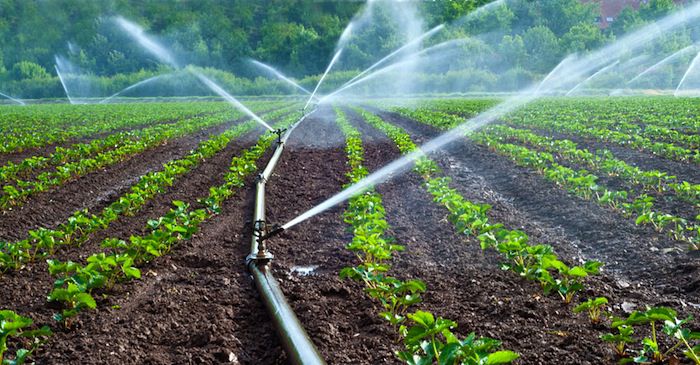
Sprinkler irrigation systems distribute water across the crop area and can be used for different crops and farm sizes.
Solar-Powered Irrigation
A solar irrigation system uses solar energy to power a water pump, making it particularly useful for farms where grid electricity is unavailable or fuel costs are a concern.
4. Select the Correct Water Pump
The pump should be selected based on the required flow rate, pumping head, water source and distance to the farm.
For solar irrigation, correctly sizing the solar panels, controller, pump and other components is essential for reliable performance.
5. Start Small and Expand
Farmers do not always need to irrigate the entire farm immediately.
A practical approach is to start with the most productive or water-sensitive section and expand the irrigation network as the farm grows. This can make affordable irrigation in Uganda more accessible to farmers working with limited budgets.
6. Install the Water Distribution System
The distribution network normally includes pipes, valves, filters, fittings and irrigation equipment.
For drip irrigation, pipes and emitters should be positioned according to crop spacing. Sprinkler systems require appropriate sprinkler spacing and operating pressure to achieve good water coverage.
A properly designed system helps minimise water losses and ensures that crops receive adequate water.
7. Consider Water Storage
Installing a water storage tank can improve the reliability of your irrigation system. Water can be pumped into the tank and distributed to the farm when needed.
Storage is especially useful where water availability or pumping schedules vary.
8. Test the Irrigation System
Before full operation, inspect and test the entire system for:
- Water leaks
- Correct pump operation
- Adequate water pressure
- Blocked emitters or sprinklers
- Proper valve operation
- Uniform water distribution
Testing ensures that problems are identified before they affect crop production.
9. Maintain Your Irrigation System
Regular Maintenance keeps an irrigation system working efficiently.
Farmers should regularly clean filters, inspect pipes and fittings, check pumps, clean emitters and sprinklers, and address leaks as soon as they are identified.
Make Irrigation Work for Your Farm
The most affordable irrigation system is not necessarily the one with the lowest initial price, it is the system that is properly designed, efficient, reliable and suitable for your farm.
Whether you need drip irrigation, sprinkler irrigation, solar water pumping or a complete farm irrigation system, Sprinktech can help you assess your water needs and identify an appropriate solution.
Contact Sprinktech today on +256 709 826632 for professional irrigation solutions designed for your farm.