10 Benefits of Installing an Irrigation System for Your Farm in Uganda
Are you still depending entirely on rainfall to grow your crops? For many farmers in Uganda, unpredictable rainfall and dry spells can make agricultural production difficult to plan.
An irrigation system gives farmers greater control over one of the most important factors in crop production: water. With the right irrigation solution, farmers can provide crops with water when they need it, improve water efficiency and create opportunities for production beyond the rainy season.
Uganda’s Ministry of Agriculture, Animal Industry and Fisheries (MAAIF) highlights irrigation as a way for farmers to cope with dry spells, produce during the dry season, transition to higher-value crops and access potentially better market opportunities.
Here are 10 important benefits of installing an irrigation system on your farm in Uganda.
1. Reliable Water Supply for Your Crops
Rainfall is not always available when crops need it most. A dry spell during critical stages such as flowering, fruit formation or grain filling can affect crop performance.
An irrigation system allows farmers to supply water when rainfall is insufficient, helping maintain more consistent crop growth.
Instead of waiting for rain, you can take greater control of your farm’s water supply.
2. Increase Crop Productivity
Adequate water is essential for healthy crop development.
When irrigation is properly designed and managed, farmers can apply water at the appropriate time and in the required quantities. This can help reduce water stress and support better crop performance.
FAO reports that irrigated cropland globally produces substantially more crop value than rainfed cropland, while emphasizing that good irrigation management and water-use efficiency are essential.
However, irrigation alone does not guarantee higher yields. Good seeds, soil fertility, pest management and proper agronomic practices are equally important.
3. Enable Year-Round Farming
One of the biggest advantages of irrigation is the opportunity to farm beyond the rainy season.
With a dependable water source and an appropriately designed irrigation system, farmers can continue producing during dry periods rather than limiting production to the main rainy seasons.
MAAIF’s Micro-scale Irrigation Programme specifically notes that irrigation can help smallholder farmers grow crops throughout the year and cope with dry spells.
This can open opportunities for farmers who want to build a more consistent agricultural business.
4. Reduce Dependence on Rainfall
Rain-fed farming can be vulnerable to changes in rainfall patterns.
Irrigation provides an additional layer of protection by allowing farmers to supplement rainfall when necessary.
This does not mean farmers should ignore rainfall or natural water conservation. Instead, irrigation can be integrated with rainwater harvesting, water storage and good soil-moisture management to improve the resilience of the farm.
5. Improve Water-Use Efficiency
Not every irrigation system uses water in the same way.
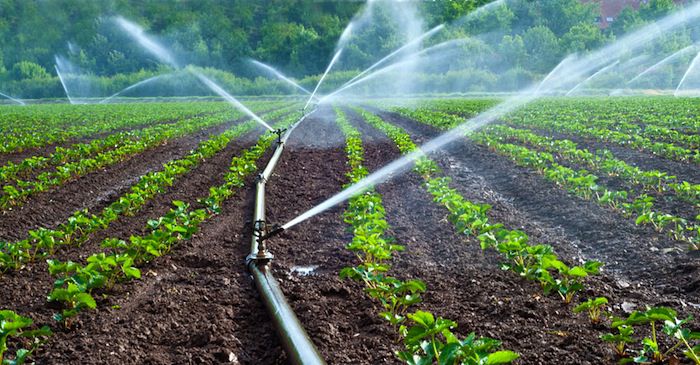
Modern systems such as drip irrigation and sprinkler irrigation can help farmers distribute water more deliberately across their fields.
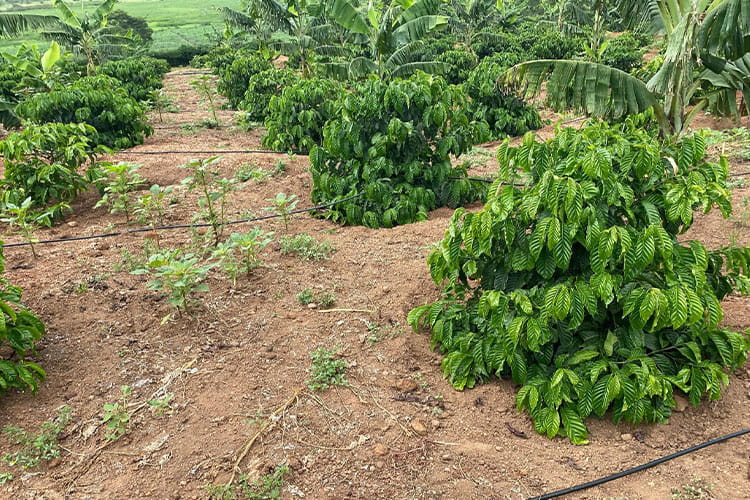
For example, drip irrigation can deliver water close to the plant’s root zone, potentially reducing unnecessary wetting and losses. FAO notes that irrigation method and field management have an important influence on agricultural water productivity.
The goal is not simply to use more water. It is to use the available water more efficiently.
6. Improve the Quality and Consistency of Produce
Water stress can affect crop development and the quality of harvested produce.
Maintaining appropriate moisture levels throughout the crop cycle can help support more uniform growth.
For farmers producing vegetables, fruits, coffee and other commercial crops, consistency can be particularly important when supplying demanding markets.
7. Create Opportunities for Higher-Value Crops
Reliable irrigation can give farmers more flexibility when choosing what and when to grow.
MAAIF notes that irrigation can support farmers in transitioning toward higher-value crops, including horticultural crops and coffee.
Depending on the market, water availability and agronomic requirements, farmers may be able to diversify their enterprises and improve the commercial potential of their farms.
8. Reduce Manual Watering and Labour
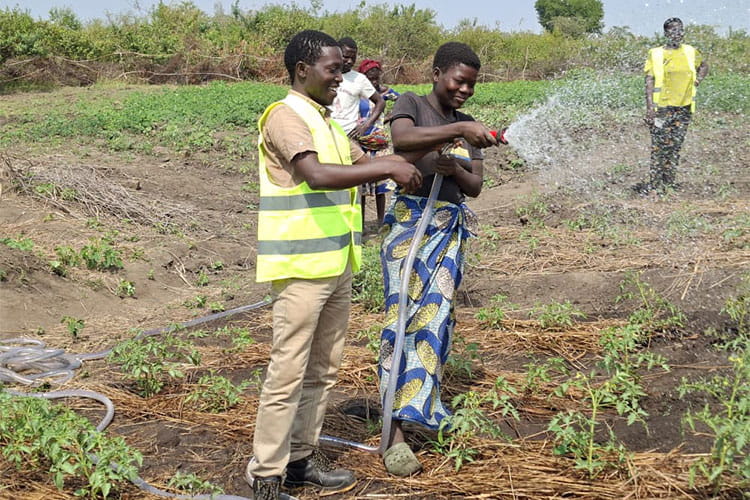
Manually carrying and distributing water across a farm can require significant time and labour.
An appropriately designed irrigation system can automate or simplify water distribution, allowing farm workers to spend more time on other activities such as:
- Crop management
- Weed control
- Pest and disease management
- Harvesting
- Post-harvest handling
- Marketing
As farms expand, efficient water distribution can become increasingly important.
9. Support Solar-Powered Irrigation
Farmers do not have to rely exclusively on grid electricity or fuel-powered pumps to operate an irrigation system.
Solar-powered irrigation can provide an alternative way to pump water, particularly in areas where grid electricity is unavailable or fuel costs make pumping expensive.
FAO highlights solar-powered irrigation as an opportunity for reliable water lifting and notes its potential to reduce dependence on conventional energy sources. FAO has also documented solar-powered pumping work supporting smallholder irrigation in Uganda.
At Sprinktech, solar pumping can be integrated with irrigation solutions to help farmers explore more sustainable ways of powering their farms.
10. Improve Farm Resilience and Profit Potential
Ultimately, irrigation is an investment in greater control and flexibility.
With reliable water management, farmers can potentially:
- Produce during dry periods
- Increase production cycles
- Diversify crops
- Improve water efficiency
- Reduce dependence on rainfall
- Respond to market opportunities
- Expand production over time
FAO identifies irrigation as an important contributor to increased yields, production stability, crop diversification and farm incomes when it is appropriately planned and managed.
Which Irrigation System Is Right for Your Farm?
There is no one-size-fits-all irrigation system.
The right solution depends on several factors, including:
- Size of the farm
- Type of crops
- Water source
- Available water quantity
- Soil type
- Land terrain
- Distance from the water source
- Required pumping capacity
- Energy source
- Budget
- Production objectives
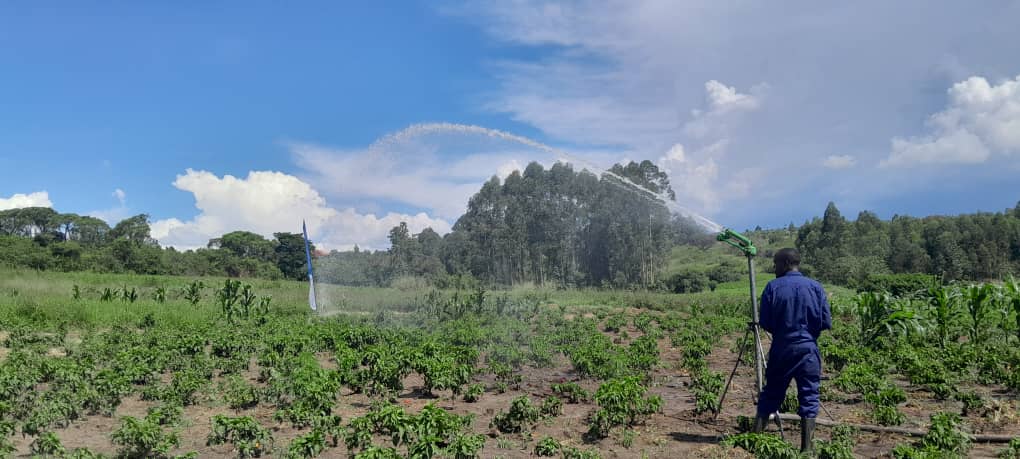
Depending on your farm, you may benefit from drip irrigation, sprinkler irrigation, rain guns, solar-powered pumping or a combination of different technologies.
This is why farmers should have their irrigation requirements assessed before purchasing equipment.
How Much Does an Irrigation System Cost in Uganda?
There is no single price for an irrigation system because every farm is different.
The total cost can depend on the acreage, water source, terrain, pumping distance, irrigation method, equipment requirements and energy source.
For example, a small vegetable farm may require a very different system from a 20-acre commercial plantation.
The best approach is therefore to design the system around your actual farm requirements rather than choosing equipment based only on price.
Uganda’s Irrigation Support Opportunities
Farmers should also be aware of government initiatives supporting irrigation adoption.
MAAIF’s Micro-scale Irrigation Programme uses a matching-grant approach to co-finance eligible irrigation equipment for farmers, with the programme designed particularly to support smallholder farmers transitioning toward commercial agriculture. The programme’s current information states that support is capped at 2.5 acres (1 hectare).
Eligibility, programme coverage and applicable terms can change, so farmers should confirm the latest requirements with the relevant authorities or programme representatives before making investment decisions.
Why Choose Sprinktech for Your Irrigation Project?
At Sprinktech, we understand that every farm has unique water and production requirements.
Our solutions cover:
- Drip irrigation
- Sprinkler irrigation
- Water pumps
- Solar-powered irrigation
- Irrigation equipment and accessories
- Water pumping solutions
Our team can help you assess your farm requirements and identify a suitable irrigation solution based on your water source, acreage, crops and production goals.
Get a Free Irrigation Consultation
Contact Sprinktech today on +256 709 826632 to get a free irrigation consultation and let our experts recommend the right solution for your farm.