How Irrigation Can Increase Vegetable Production During Dry Seasons
Vegetable production is one of the most important agricultural activities for improving food security, generating income, and supporting livelihoods. However, dry seasons continue to present major challenges for farmers due to reduced rainfall, increased temperatures, and declining soil moisture. These conditions often lead to lower yields, poor crop quality, and reduced profitability.
For farmers who depend entirely on rainfall, vegetable production can become unpredictable and seasonal. Fortunately, irrigation provides a practical and sustainable solution. By supplying crops with water when natural rainfall is insufficient, irrigation enables farmers to maintain healthy crop growth, extend production periods, and increase harvests throughout the year.
Whether growing vegetables for household consumption or commercial markets, irrigation has become a critical investment for improving productivity and building resilience against changing climate conditions.
Why Vegetable Production Declines During Dry Seasons
Vegetables require a consistent supply of water to support germination, root development, nutrient uptake, flowering, and fruit formation. During dry seasons, soil moisture reduces significantly, making it difficult for crops to access the water needed for healthy growth.
When vegetables experience water stress, several challenges occur. Plants grow slowly, leaves wilt, flowering reduces, and overall yields decline. Extended dry conditions may also weaken crops and increase vulnerability to pests and diseases.
This affects common vegetable crops such as tomatoes, onions, cabbage, green peppers, spinach, carrots, and leafy greens that depend on regular moisture for quality production.
How Irrigation Improves Vegetable Production
Irrigation provides controlled and timely water application that supports healthy crop development throughout every growth stage. Instead of relying entirely on unpredictable rainfall, farmers gain greater control over crop performance and production schedules.
The benefits of irrigation extend beyond simply supplying water. It supports stable crop growth, reduces moisture stress, and gives farmers the confidence to continue production even when rainfall is low. With a dependable irrigation system in place, vegetable farming becomes less seasonal and more productive.
Consistent Water Supply for Healthy Growth
One of the greatest advantages of irrigation is maintaining stable soil moisture levels. Vegetables perform best when water availability remains consistent rather than fluctuating between drought and heavy rainfall. Sudden moisture stress affects plant growth, delays maturity, and reduces the quality of the final harvest.
A reliable water supply supports:
- Faster and more uniform germination
- Stronger root development
- Improved nutrient absorption
- Healthier plant growth
- Increased crop uniformity
When crops receive water consistently, they produce better quality vegetables that meet market expectations and maintain healthier growth from planting to harvest.
Increased Yield and Better-Quality Produce
Water directly affects crop size, appearance, texture, and shelf life. Irrigated vegetables typically produce higher yields compared to rain-fed systems because plants can continue developing without moisture stress. Instead of slowing down during dry periods, crops remain active and productive when the right amount of water is supplied.
Improved irrigation management often results in:
- Larger harvest volumes
- Improved vegetable quality
- Better market value
- Reduced crop losses
For commercial farmers, this translates into increased profitability, more reliable supply to buyers, and stronger business performance across different seasons.
Enables Year-Round Vegetable Production
One of the biggest limitations of traditional farming is dependence on rainy seasons. Irrigation removes this limitation by allowing production to continue throughout dry periods. Rather than waiting for the next rainy season, farmers can plan their own planting schedules and maintain continuous production.
Year-round production gives farmers several advantages:
- Multiple planting cycles annually
- Continuous market supply
- Improved income stability
- Better ability to meet customer demand
Dry-season farming can also provide access to premium market prices when supply from other producers decreases, making irrigation a powerful tool for both production and profitability.
Efficient Irrigation Methods for Vegetable Farming
Advancements in irrigation technology have created more efficient ways of delivering water while reducing waste and operating costs. Choosing the right irrigation method depends on farm size, crop type, water source, and the farmer’s budget.
For vegetable production, some of the most practical irrigation methods include drip irrigation, sprinkler irrigation, and solar-powered irrigation systems. Each of these options helps farmers improve water management while supporting better crop performance.
Drip Irrigation for Vegetable Farming
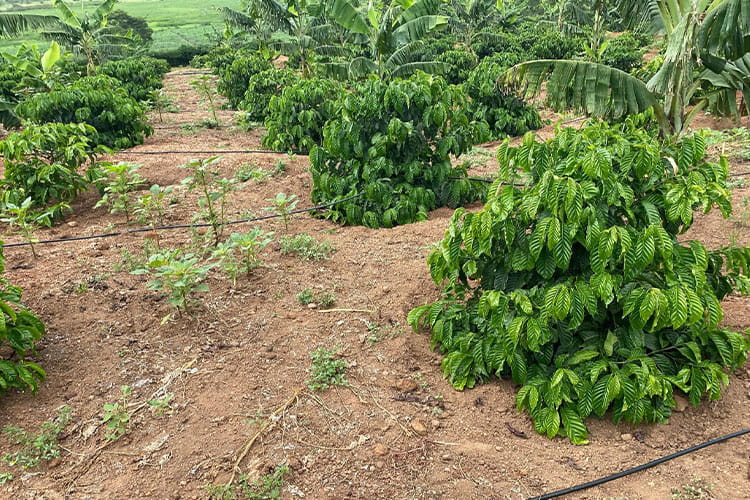
Drip irrigation delivers water directly to the root zone of each plant through a network of pipes and emitters. This method minimizes evaporation and ensures efficient water use, making it ideal for vegetable production where precise watering is important.
Because water is applied exactly where it is needed, drip irrigation helps reduce wastage while improving crop health. It is especially effective for vegetables such as tomatoes, onions, peppers, cabbages, and other high-value crops that benefit from consistent root-zone moisture.
Sprinkler Irrigation for Wider Coverage
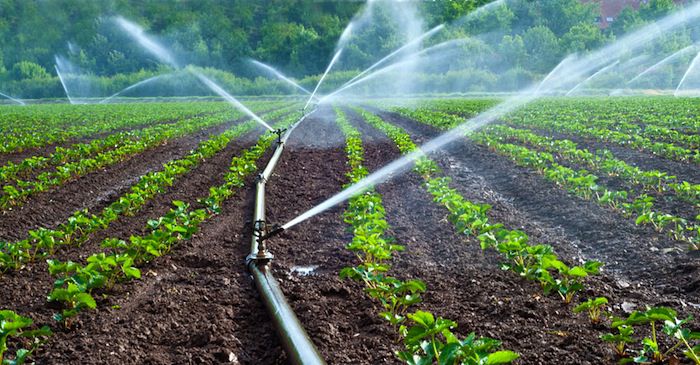
Sprinkler systems distribute water evenly across fields and are suitable for a wide range of vegetable crops. They provide flexibility and help maintain uniform crop growth, especially on farms where multiple vegetable varieties are grown in one area.
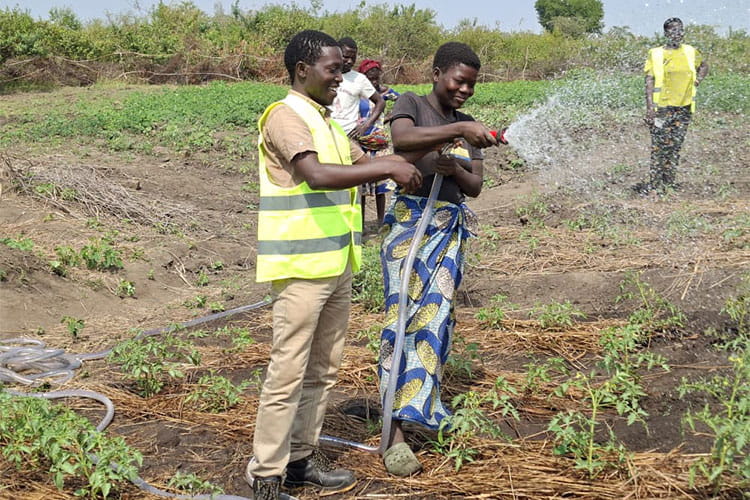
Sprinkler irrigation can be a practical choice for farmers who want broader field coverage and reliable moisture application during dry seasons. When properly designed, it can support healthy vegetable production while reducing the labour required for manual watering.
Solar-Powered Irrigation for Lower Running Costs
Solar-powered irrigation combines renewable energy with modern irrigation systems to reduce dependence on fuel and electricity. This solution lowers operating costs while supporting sustainable agricultural practices, especially for farmers who want a long-term irrigation option with fewer recurring expenses.
By using solar energy to power water pumping, farmers can irrigate more consistently without the burden of daily fuel costs. This makes solar irrigation especially attractive for dry-season vegetable production where frequent watering is necessary.
Best Practices for Irrigating Vegetables During Dry Seasons
To maximize irrigation performance and achieve better yields, farmers should adopt proper water management practices. Installing an irrigation system alone is not enough if water is applied inefficiently or at the wrong time.
Recommended practices include:
- Irrigating early in the morning or late in the evening to reduce evaporation
- Applying mulch to conserve soil moisture
- Monitoring crop water requirements regularly
- Maintaining irrigation equipment for efficiency
- Matching irrigation schedules to crop growth stages
These practices improve water use efficiency, reduce unnecessary losses, and contribute to healthier crop development throughout the growing period.
Investing in Irrigation for Sustainable Agriculture
As climate conditions continue to change and demand for fresh vegetables increases, irrigation is becoming an essential part of modern agriculture. Farmers who invest in efficient irrigation systems gain better control over production, reduce climate-related risks, and create opportunities for long-term growth.
Irrigation is no longer just a backup plan for dry weather. It is a practical production tool that allows farmers to farm with greater confidence, protect their crops during difficult weather, and improve output throughout the year. With the right irrigation approach, dry seasons no longer have to limit agricultural success.
Conclusion
Irrigation is more than a farming tool. It is an investment in productivity, sustainability, and profitability. By ensuring reliable access to water, farmers can increase vegetable yields, improve produce quality, extend growing seasons, and maintain year-round production.
Adopting efficient irrigation systems today helps build stronger farms and supports long-term agricultural success. For farmers who want to improve vegetable production during dry seasons, irrigation offers one of the most practical and profitable solutions available.
Ready to Increase Your Vegetable Production?
Dry seasons should not determine your harvest.
Partner with Sprinktech for reliable irrigation solutions designed to help you grow more, save water, and maximize returns throughout the year.
Contact Sprinktech on: +256 709 826632 for all your inquiries.