How Much Does It Cost to Install an Irrigation System in Uganda? A Look at the Cost Drivers
One of the first questions every farmer asks when considering irrigation is: “How much will it cost?” This is also the hardest question to answer with a single number, because the honest reply is: it depends. Irrigating a twenty-acre vegetable garden near a swamp in Wakiso incurs significantly different costs than a twenty-acre maize farm in Lira that relies on a deep borehole. That said, farmers deserve more than a shrug. This guide breaks down every major cost driver for an irrigation system and helps you understand what you are actually paying for, so you can budget/plan realistically.
1. The Water Source: Your Biggest and Most Variable Cost
Before a single pipe is laid or a sprinkler is installed, you need water to pump. The cost of accessing that water can vary by a factor of ten or more, and it is often the single largest line item in any irrigation budget.
If your farm sits beside a river, lake, or swamp, you are in the most fortunate position. Where a farmer must access groundwater by drilling a borehole or a hand-dug well, costs rise significantly.
Drilling a borehole in Uganda involves a hydrogeological survey, drilling, casing, pump-testing, and water quality testing. All these processes come with corresponding costs.
2. The Water Pump: Petrol, Diesel, or Solar?
The pump is the engine of your irrigation system. It lifts water from the source and delivers it at the pressure and quantity your distribution network requires. The choice of pump type has major implications for both upfront cost and long-term running costs.
Petrol and diesel pumps carry the lowest purchase price and are widely available across Uganda. However, the fuel costs involved in continuously running them are significant.
Solar-powered pumps cost more to buy initially, but have little to no operating costs. The investment usually pays back within two to four dry seasons through fuel savings alone.
3. The Irrigation Method: Drip, Sprinkler, or Flood?
Once water is pumped, it must be delivered to your crops. The method you choose has an effect on cost, efficiency, and which crops it suits.
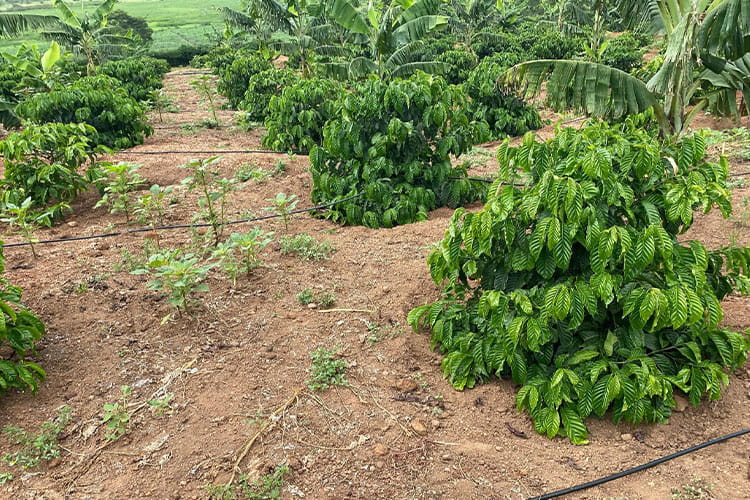
Drip systems deliver water directly to the root zone and are ideal for vegetables, coffee, tomatoes, passion fruit, and other high-value horticultural crops. On average, these are the most expensive irrigation systems to set up.
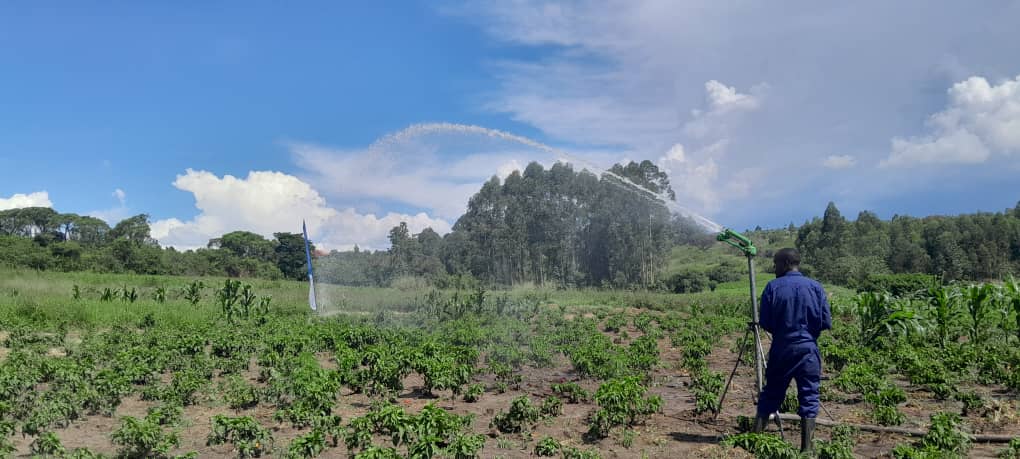
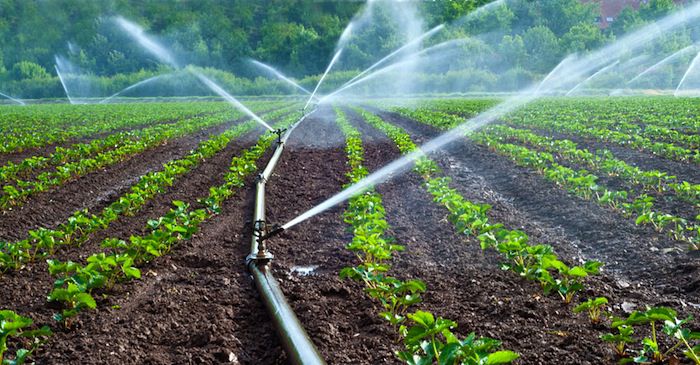
Sprinkler systems, on the other hand, mimic rainfall, distributing water over a wide area through rotating or fixed heads. They suit maize, beans, wheat, pasture, and other broadcast-planted crops. They are relatively cost-friendly as compared to drip systems. However, the costs for acquiring larger sprinkler equipment, such as traveling irrigators and pivot systems, are relatively very high.
In flood and furrow irrigation, water is channeled along furrows between crop rows and allowed to soak into the soil. It requires minimal equipment investment and is common on rice and sugarcane fields in low-lying areas with a reliable surface water supply.
4. Piping
Many farmers underestimate the cost of piping. However, this can become very significant when the water source (a borehole, river, or storage tank) is located some distance from the field to be irrigated.
Pipe costs in Uganda vary by diameter, wall thickness, pressure rating, and the material of make (HDPE, uPVC, or GI).
5. Site Assessment, System Design, and Installation Labour
A well-designed irrigation system is not just cheaper to operate; it avoids the expensive failures that come from undersized pumps, poor water distribution, among others. A site assessment to establish the site conditions, such as the water source, land slope, and crop type, is often required during the system design stage. This comes with separate associated costs.
During system installation, labour is required to accomplish tasks such as excavating pipe trenches, laying and connecting pipes, mounting pump sets/solar panels, installing controllers or timers, and commissioning the system. Labor costs differ based on location and the skill level of the workforce employed.
6. Ongoing Maintenance: The Cost That Never Goes Away
An irrigation system is a capital investment, not a one-off purchase. Systems that are poorly maintained fail within two to three seasons, leaving the farmer with a non-functional asset and expensive repair bills. Building a maintenance budget from day one is essential.
7. What Else Affects Your Final Price?
Beyond the six main cost drivers above, several additional factors can push your budget up or down:
Location and transport: Equipment and contractor mobilization to remote areas raises costs significantly.
Topography: Hilly or undulating land requires more complex pipe layouts. Flat areas may need pressure-boosting equipment. All these bring about added cost.
Crop type and spacing: Widely spaced crops like coffee or fruit trees need fewer water emission points per acre than densely planted vegetables, which directly reduces material costs.
Quality of Equipment: The origin and make of the equipment used (such as pumps, pipes) greatly affect the overall system cost as well as its lifespan.
Automation: Adding a controller, solenoid valves, and timer automation for scheduled (intelligent) irrigation comes with additional costs but reduces labour and the risk of over- or under-watering.
8. The Bottom Line
There is no universal price tag for an irrigation system in Uganda. What separates a good investment from an expensive mistake is not the price; it is the quality of the design, the suitability of the equipment to your specific crop and site, and the ongoing maintenance that keeps the system running season after season.
The best starting point is always a site assessment by a qualified irrigation engineer. At Sprinktech, our team conducts farm visits across Uganda, from Kampala to Gulu to Mbarara, to help farmers understand exactly what they need, how much it will cost, and how quickly the investment will pay back through improved yields season after season.