Picture this: The sun rises over your compound, your family is awake, and the first task of the day is water. Whether you are filling a tank for domestic use, watering a kitchen garden, or supplying a small livestock unit, the need is the same every single day reliable, affordable water. Yet for millions of households and smallholder farmers across Uganda, that reliability is not guaranteed. Borehole pumps run on electricity that goes out. Hand pumps break down. Carrying water from distant sources costs time, labour, and money that could go elsewhere.
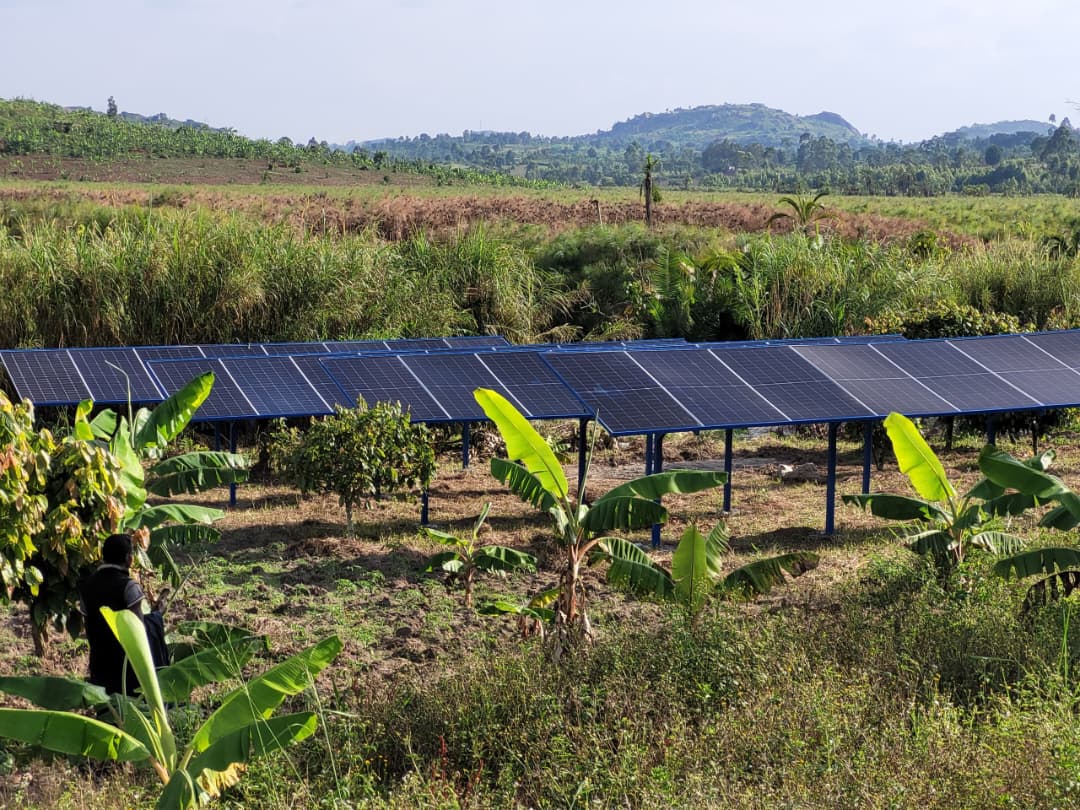
Solar water pumping changes that equation entirely. It puts a clean, low-maintenance, fuel-free water supply in your hands, powered by the same sunshine that Uganda receives in abundance. But choosing the right solar pumping system is not as simple as buying a panel and a pump. The wrong combination wastes money and underperforms. The right one serves your household for fifteen years or more with minimal running costs.
So how do you go about selecting the right system?
Step 1: Understand Your Daily Water Needs
Before you purchase a single component, you need to know how much water you actually use and when you need it most.
For a household, this means adding up water for drinking, cooking, bathing, laundry, and any livestock or garden irrigation. A reasonable estimate for a typical Ugandan household is between 20 and 50 litres per person per day for basic domestic use, but this rises considerably when you factor in gardens, animals, or small-scale commercial activities.
The reason this step matters so much is that your daily water demand directly determines the pump output and storage capacity you need. Underestimate it, and you will find yourself with a system that runs dry before sunset. Overestimate it, and you overpay for equipment you do not need.
Step 2: Evaluate Your Water Source
A solar pump is only as reliable as the source it draws from. Uganda is well-served with groundwater, rivers, dams, rainwater harvesting systems, and lakes but not every source is suitable for every pump type, and not every source is consistent through the dry season.
The key questions to answer about your water source are: How deep is the water level below ground? Does the source yield enough water to meet your peak daily demand? Does it remain reliable in the dry months of January, February, and June through August?
Shallow open wells and surface sources such as ponds or streams suit surface pumps. Deep boreholes require submersible pumps. Knowing the nature and depth of your source at this stage saves you from buying the wrong pump type entirely.
Step 3: Calculate Your Pumping Head and Pipe Distance
This is the step most people skip and the one that causes the most system failures.
Pumping head refers to the total vertical height that water must be lifted from the source to its final delivery or storage point. A borehole that is 30 metres deep, combined with an overhead tank sitting 5 metres above ground level, means your pump must work against a head of at least 35 metres — before accounting for friction losses in the pipes.
Pipe friction loss depends on the diameter of your pipes, the flow rate, and the total length of the pipe run. Longer, narrower pipes at high flow rates create significant resistance that reduces pump performance and increases energy demand.
Total Dynamic Head (TDH) — vertical lift plus friction losses — is the single most important technical figure for selecting the right pump. Get this wrong and your pump either underperforms or burns out prematurely. A Sprinktech engineer can help you calculate this accurately during a site assessment which is always mandatory for any system.
Step 4: Size Your Solar Array
Uganda sits close to the equator and receives between five and six peak sun hours per day on average some of the most favourable solar conditions in the world for pumping applications. This means a well-sized solar array can power a pump for enough hours each day to fill a properly sized storage tank, with no fuel costs and no grid dependency.
Sizing the solar array correctly means matching panel wattage to your pump’s power requirement, then factoring in your daily peak sun hours and any losses from dust, shading, wiring, or temperature.
As a general rule, your solar array should generate at least 20 to 30 percent more power than your pump’s rated wattage to account for real-world inefficiencies. A system undersized in solar panels will pump slowly on clear days and barely at all under cloud cover.
Step 5: Choose the Right Pump Type for Your Situation
Not all solar pumps are the same, and selecting the right type for your specific source and demand is critical.
Submersible pumps are installed directly inside a borehole, pond, dam or shallow well, below the water surface. They are ideal for depths greater than 8 to 10 metres and are the standard choice for most household borehole installations in Uganda. Modern submersible solar pumps are highly efficient and built to handle the sandy, silty water conditions common in Ugandan aquifers.
Surface pumps sit above the water source and draw water up through a suction pipe. They are simpler to service and inspect but are limited to shallow water sources of no more than 7 to 8 metres of suction lift. They work well with ponds, streams, shallow wells, and rainwater tanks.
On the electrical side, DC pumps run directly off your solar panels without an inverter, making them simpler and more efficient for smaller systems. AC pumps paired with an inverter are better suited to larger installations where higher output is needed and the system may also connect to a backup grid or generator supply.
Step 6: Plan Your Water Storage
Solar pumps run only when the sun is shining. To supply water through the night, on heavily overcast days, and during the early morning hours before the panels are producing enough power, you need a storage tank large enough to bridge those gaps.
The standard recommendation is to size your storage tank to hold at least two to three days of your calculated daily water demand. For a household using 1,000 litres per day, this means a tank of 2,000 to 3,000 litres minimum.
Overhead tanks allow gravity-fed distribution throughout the home without a secondary pump, which is the simplest and most energy-efficient arrangement. Underground tanks are suitable where overhead structures are not practical, but will require a booster pump to deliver water to taps and showerheads.
Step 7: Commission a Professional Design and Installation
A solar pumping system is an investment that should last ten to twenty years. The quality of the design and installation determines whether it achieves that lifespan or becomes an expensive source of frustration within the first few years.
A certified installer carries out a full site assessment, calculates your TDH accurately, specifies correctly matched components, sizes the solar array properly for your latitude and conditions, and installs the system safely with the right cable sizing, protection devices, and mounting.
At Sprinktech Limited, our team has designed and installed solar pumping systems across Uganda for domestic, agricultural, and institutional clients. We select only proven pump brands and panels rated for tropical conditions, and we back every installation with ongoing technical support.