Why Waiting for Rain Is Costing Farmers More Than Irrigation Investment
For generations, farming has depended heavily on rainfall. When the rains come at the right time and in sufficient amounts, crops grow well, harvests improve, and farmers can earn a good income. But when the rains delay, become unpredictable, or stop too early, the entire production cycle can be affected.
For many farmers, the response has traditionally been to wait for the rain.
But in today’s changing agricultural environment, waiting for rain can cost farmers more than investing in a reliable irrigation system.
Irrigation is no longer simply an option for large commercial farms. With the availability of solar-powered pumps, efficient irrigation technologies, and appropriately designed systems, farmers of different scales can take greater control of when and how their crops receive water.
The Hidden Cost of Depending Entirely on Rainfall
Rain-fed agriculture may appear cheaper because there is no upfront investment in irrigation equipment. However, the absence of an irrigation system does not mean there are no costs.
When rainfall is delayed or insufficient, farmers may experience:
- Delayed planting and missed planting windows
- Reduced crop yields
- Crop losses during dry periods
- Poor-quality produce
- Increased pest and disease pressure
- Unreliable harvest schedules
- Difficulty supplying markets consistently
- Lost income and wasted farm inputs
A farmer may spend money on seeds, fertilizers, land preparation, labour and crop protection, only to lose part of the expected harvest because the crops did not receive enough water at the right time.
That is the real cost of relying entirely on rainfall.
Irrigation Gives Farmers Greater Control
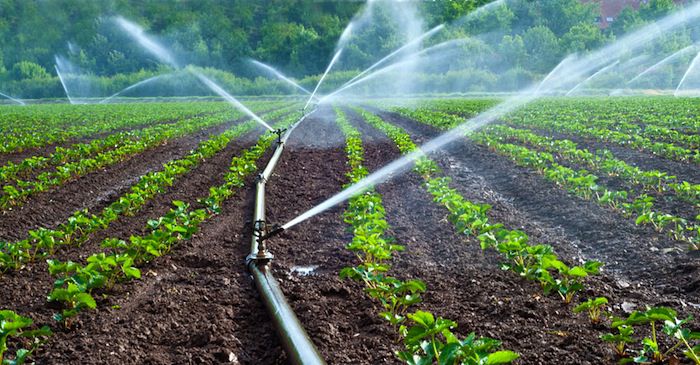
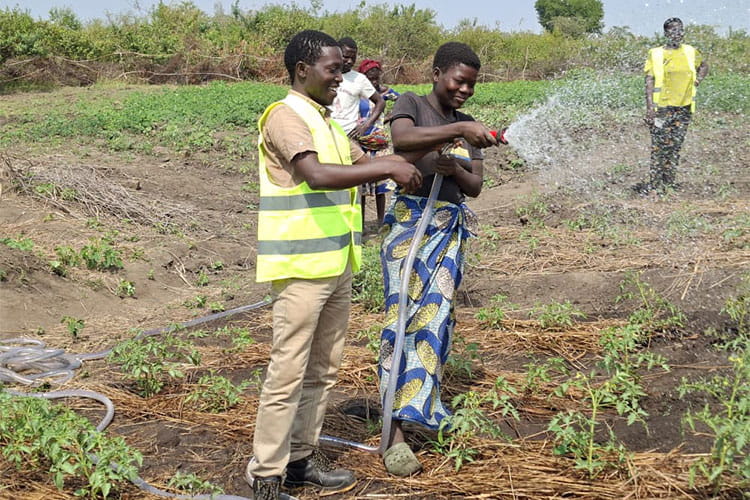
Irrigation allows farmers to supply crops with water when natural rainfall is insufficient.
This does not mean replacing rainfall completely. Instead, irrigation can complement rainfall by providing water during critical periods when crops need it most.
With a properly designed irrigation system, farmers can better manage crop water requirements and reduce their dependence on unpredictable weather conditions.
For example, during a short dry spell, an irrigation system can provide the water needed to keep crops growing instead of leaving the farmer to hope that rain arrives.
Irrigation Can Improve Productivity
Water availability is one of the most important factors influencing crop growth.
When crops receive adequate water at the right stages of development, farmers can create better conditions for healthy growth and more consistent production.
Irrigation can therefore help farmers:
- Maintain crop growth during dry periods
- Improve production consistency
- Support higher-value crops
- Increase the potential for multiple planting seasons
- Make better use of fertilizers and other farm inputs
- Plan production around market demand rather than rainfall alone
For commercial farmers, this level of control can make a significant difference because production becomes less dependent on whether the next rainfall arrives on time.
The Cost of Not Irrigating Can Be Higher
One of the biggest misconceptions about irrigation is that the cost is simply the price of purchasing and installing equipment.
The better question is:
What is the cost of losing a crop because there was no reliable source of water?
Consider a farmer who invests heavily in a crop but experiences a prolonged dry period at a critical stage. The farmer could lose not only the expected harvest but also the money already spent on land preparation, seeds, fertilizer, labour and crop management.
When viewed from this perspective, irrigation becomes an investment in protecting production rather than simply an additional farm expense.
Solar Irrigation Is Changing the Equation
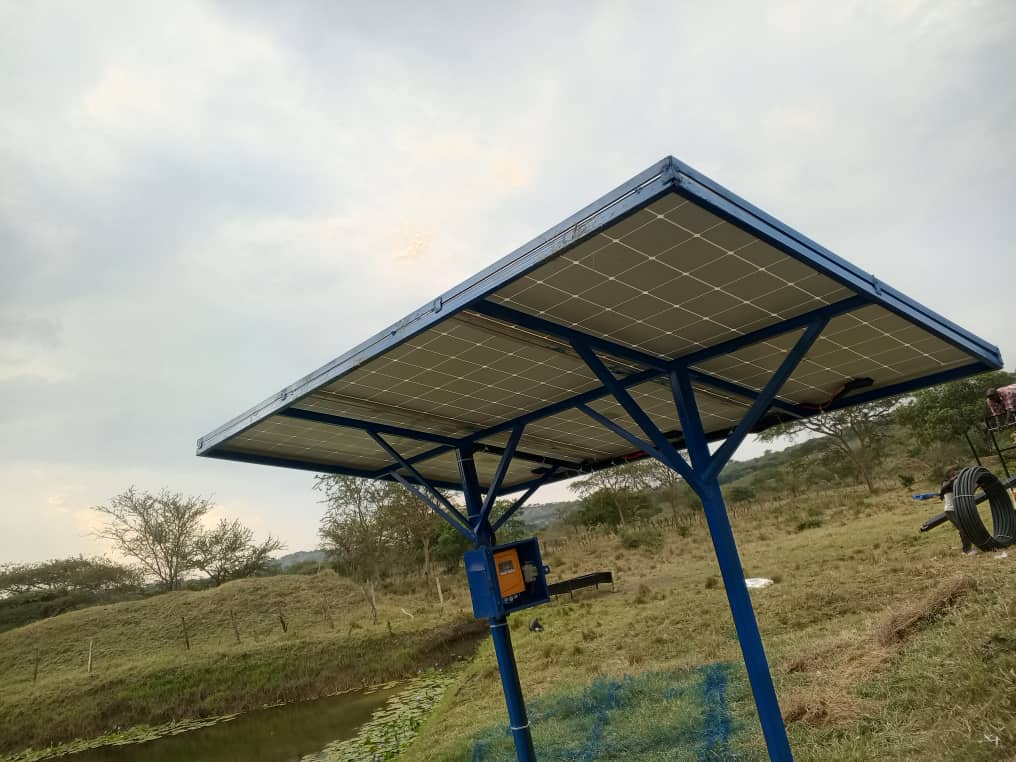
The growth of solar-powered irrigation is making irrigation increasingly practical for farmers in areas where access to reliable grid electricity is limited or where fuel costs make conventional pumping expensive.
A solar irrigation system can use solar energy to power a water pump, drawing water from an appropriate source such as a borehole, well, reservoir, river or other approved water source.
Solar-powered irrigation can offer several advantages, including:
- Reduced dependence on grid electricity
- Lower exposure to fuel price fluctuations
- Ability to irrigate in off-grid locations
- Potentially lower operating costs
- Greater flexibility in farm planning
However, the success of a solar irrigation system depends on proper system design. Pump selection, water source, crop water requirements, solar resource, irrigation method, storage and distribution should all be considered before installation.
Irrigation Does Not Have to Mean Wasting Water
Modern irrigation is not simply about putting more water on a farm. It is about applying the right amount of water, at the right time and in the right place.
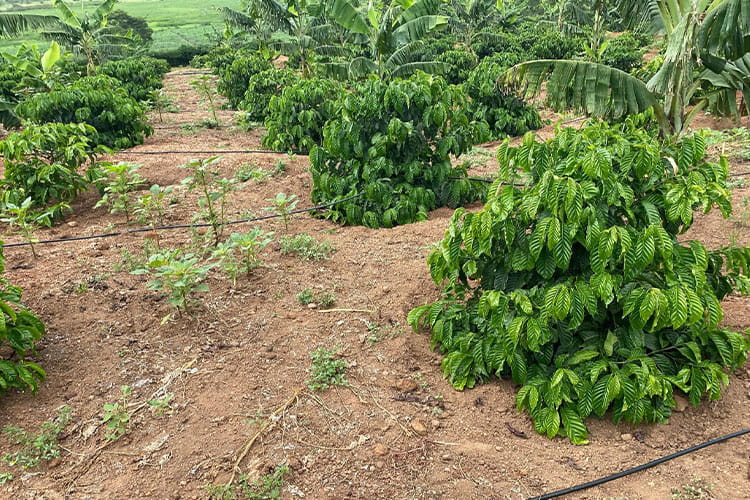
Efficient irrigation technologies such as drip irrigation and sprinkler systems can help distribute water more effectively.
Drip irrigation, for instance, delivers water close to the crop root zone, making it particularly useful for crops that require controlled and targeted watering.
Proper scheduling is equally important. Farmers should consider factors such as crop type, growth stage, soil conditions, weather and available water when determining irrigation requirements.
Start With the Water Source
Before investing in irrigation equipment, farmers should first understand their available water resource.
Questions to consider include:
Where will the water come from?
How much water is available?
Is the source reliable throughout the production season?
How far and how high must the water be pumped?
How much water does the crop require?
These factors determine the appropriate pump, solar system, storage capacity and irrigation method.
This is why irrigation should not be approached as simply buying a pump. A complete irrigation solution needs to be designed around the specific requirements of the farm.
Irrigation Can Support More Predictable Farming
One of the biggest advantages of irrigation is not simply increased production—it is greater predictability.
Farmers can plan planting dates, production cycles and market supply with greater confidence when they have a dependable source of irrigation water.
This can be particularly valuable for farmers supplying hotels, schools, supermarkets, processors, exporters and other structured markets that require consistent quantities and quality.
Instead of asking, “Will the rain come?”, the farmer can focus on questions such as:
“What should I plant?”
“When should I plant it?”
“How much water does it need?”
“When will it be ready for the market?”
That shift from uncertainty to planning can make irrigation a powerful agricultural investment.
The Right Irrigation Investment Depends on Your Farm
There is no single irrigation system that is suitable for every farmer.
A small vegetable farm may require a different solution from a large commercial plantation. Similarly, a farm with a nearby water source will have different requirements from one that needs to pump water from a deep borehole.
Before making an investment, farmers should consider:
- Farm size – How much land needs to be irrigated?
- Crop type – What crops are being grown?
- Water source – Where will irrigation water come from?
- Water requirement – How much water is needed?
- Topography – What elevation and distance must the water cover?
- Energy source – Solar, electricity, fuel or a combination?
- Irrigation method – Drip, sprinkler, pivot or another suitable system?
- Budget – What level of investment is practical?
- Future expansion – Can the system be expanded as the farm grows?
A professional assessment can help farmers avoid purchasing equipment that is either too small for the farm or unnecessarily expensive.
The Question Is No Longer “Can I Afford Irrigation?”
For many farmers, the more important question is:
“Can I afford to continue farming without reliable irrigation?”
Climate variability, changing rainfall patterns and increasing demand for agricultural products are making water management increasingly important.
Irrigation can help farmers reduce their exposure to rainfall uncertainty, protect farm investments and create opportunities for more consistent production.
The goal is not necessarily to eliminate dependence on rainfall. It is to ensure that when rainfall is insufficient, the farmer has another option.
Take Control of Your Farm’s Water Supply
Rain will always remain an important part of agriculture. But relying entirely on rain means allowing weather conditions to determine when and how much you can produce.
Irrigation gives farmers greater control.
At Sprinktech, we provide irrigation, water pumping and solar solutions designed around the specific needs of farms, from water sourcing and pumping to efficient distribution across the field.
Don’t wait for the next rain to determine your next harvest.
Get a free Irrigation Consultation
Contact Sprinktech today on +256 709 826632 to get a free irrigation consultation and let our experts recommend the right solution for your farm.